Research & Publications

My research often begins with a question drawn from everyday experience: how can changes in skin be measured more accessibly, what environmental cost is hidden inside a skincare routine, or whether bio-based materials can replace synthetic cosmetic ingredients? I explore these questions through prototyping, surveys, statistical analysis, literature review, and scientific writing.

Wearable Skin Science

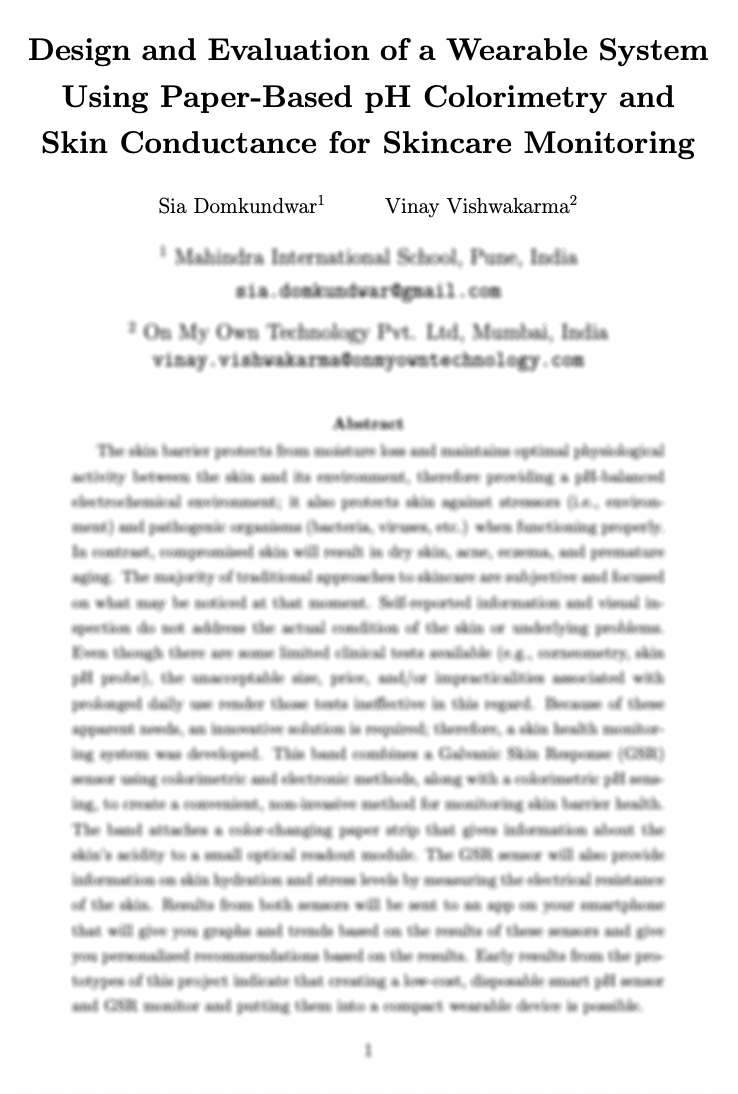
Design and Evaluation of a Wearable System Using Paper-Based pH Colorimetry and Skin Conductance for Skincare Monitoring Accepted for publication in the Springer conference proceedings of ICWIHI 2026

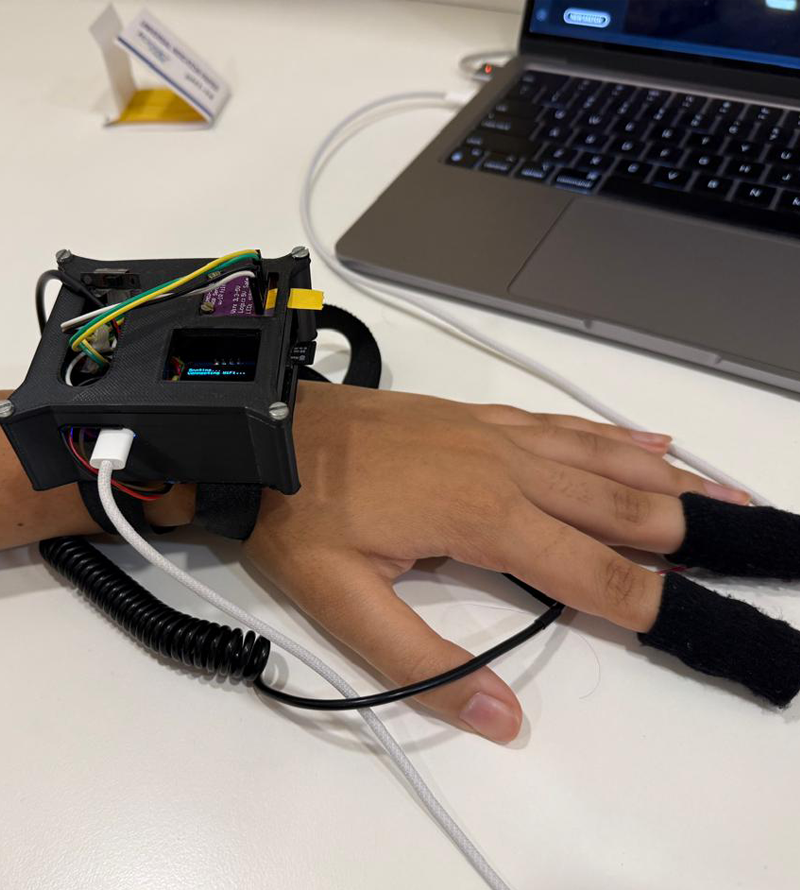
Developed from the DermaBand project, this paper investigates whether paper-based pH colorimetry and skin-conductance sensing can be combined in a low-cost, non-invasive wearable to monitor changes in skin condition.

I designed and fabricated the prototype, developed the experimental testing protocol, collected and analyzed sensor data, and authored the paper presenting the system design, methodology, findings, limitations, and potential applications.

  • Multimodal sensing - Chemical and electrical indicators in one system.
  • Experimental design - Prototype development and structured testing.
  • Data analysis - Interpretation of pH and conductance measurements.
  • Research output - Full paper accepted for Springer proceedings.
Wearable Skin Science
Student Leadership
Wearable Skin Science

Skincare Sustainability

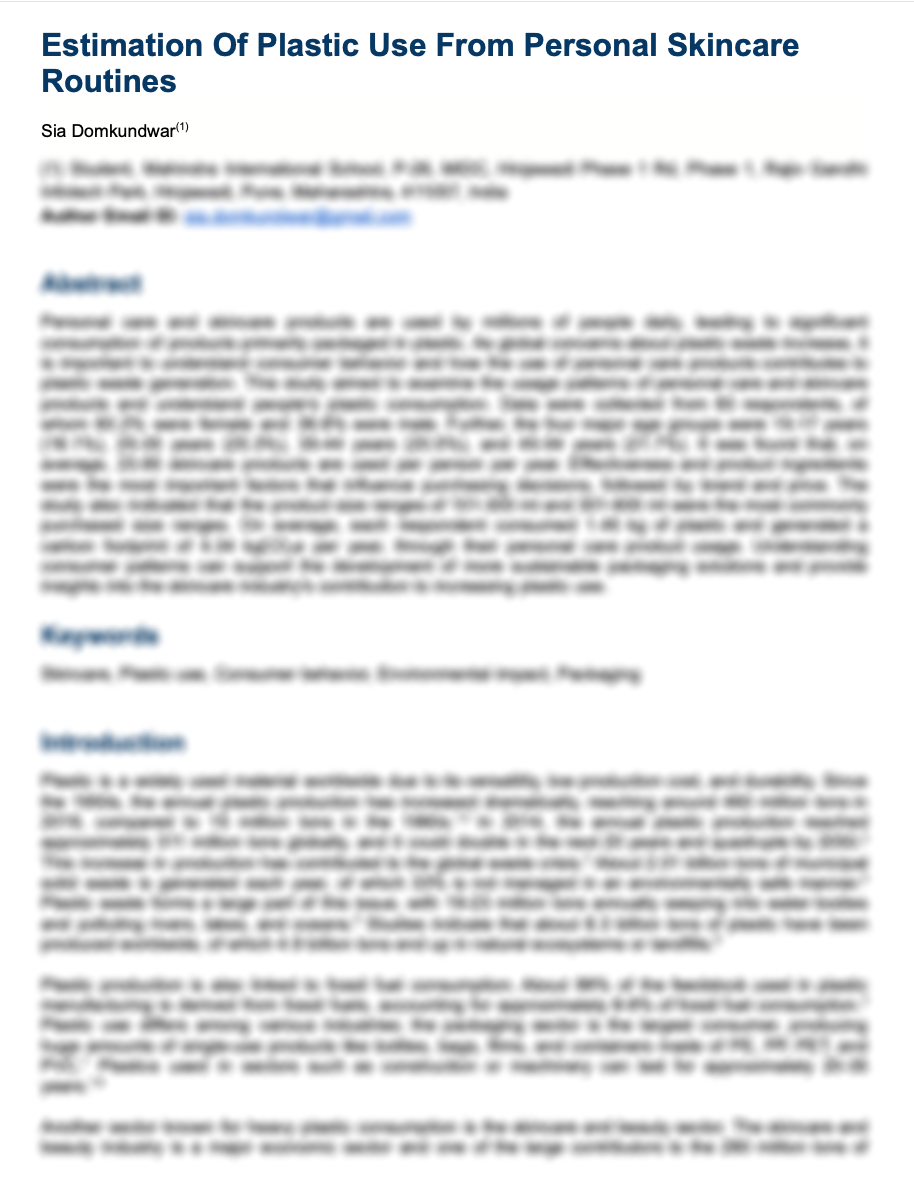
Estimation of Plastic Use from Personal Skincare Routines Journal submission in progress

Inspired by my own skincare use and interest in ingredient-conscious, environmentally responsible beauty, I examined the plastic and carbon footprint hidden within everyday personal-care routines.

I surveyed more than 80 respondents across India, the United States, and the United Kingdom, physically weighed personal-care packaging, and developed a replicable method for converting product size and repurchase frequency into annual plastic-use and carbon-emission estimates. The data were analyzed using descriptive statistics, independent t-tests, and one-way ANOVA.

  • 1.45 kg - Estimated annual plastic use per person.
  • 4.34 kg CO₂e - Estimated annual packaging-related carbon footprint per person.
  • Highest contributors - Shampoo, body wash, and conditioner.
  • Broader finding - No statistically significant differences by age or gender within the sample.
Skincare Sustainability

Sustainable Biopolymers

Bio-Based Alternatives to Synthetic Cosmetic Polymers Research and Market Intelligence Internship, BacAlt Bio

I investigated the prevalence and functional roles of microplastics in cosmetics, their biological and environmental effects, and evolving regulation across India, the European Union, the United States, and the United Kingdom.

I produced an evidence-based technology and market report evaluating bacterial nanocellulose and gamma-polyglutamic acid as bio-based replacements for synthetic cosmetic polymers. The report included a function-by-function comparison of performance, safety, biodegradability, formulation compatibility, cost, regulatory readiness, and commercial potential.

  • Cosmetic microplastics - Prevalence and functional uses.
  • Health and environment - Biological, toxicological, and ecological evidence.
  • Regulatory landscape - India, EU, US, and UK.
  • Bio-based alternatives - Bacterial nanocellulose and gamma-PGA.
  • Primary output - Evidence-based technology and market report, including a functional comparison matrix assessing whether bio-based materials can replace synthetic cosmetic polymers in specific applications.
Sustainable Biopolymers