CREST Gold
Award
Awarded Gold for the DermaBand independent research project.
A low-cost wearable designed to track changes in skin condition using pH and skin-conductance sensing.
I wanted to explore whether simple, inexpensive measurements could make changes in the skin easier to notice and understand. DermaBand began with that question and developed into a working wearable prototype and a research study.

Awarded Gold for the DermaBand independent research project.

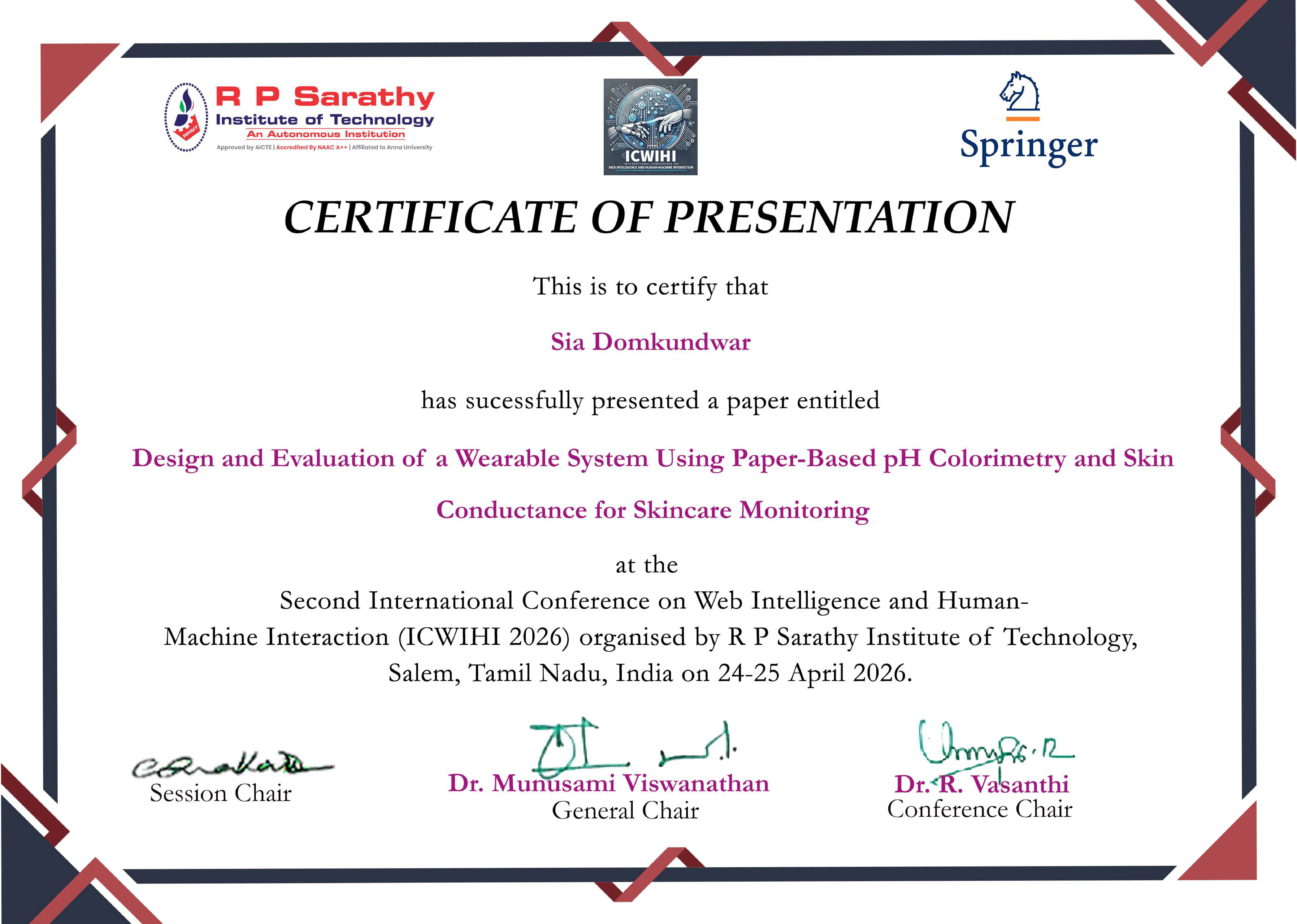
Research on DermaBand selected for oral presentation and publication in the ICWIHI 2026 conference proceedings.

Selected for the regional stage of the Indian National Science and Engineering Fair.

Invited to present DermaBand through IIT Bombay’s student innovation and entrepreneurship competition.
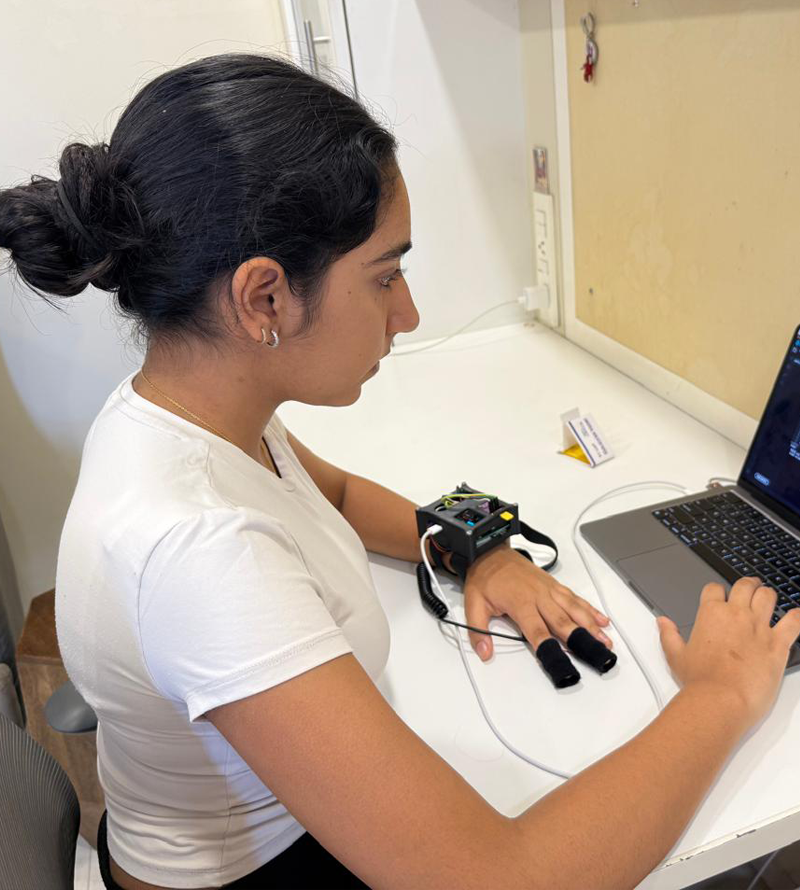
Could two accessible sensing methods be combined to give a more useful picture of changes in the skin?
Skin is usually assessed either by what we can see and feel or with specialised clinical equipment. I wanted to explore something in between: a low-cost wearable that could measure simple physiological signals and make them easier to track over time.
I chose two different measures. Skin pH provides information about acidity at the skin surface, while electrical conductance changes with moisture and sweat activity. DermaBand brings the two together rather than relying on a single reading.
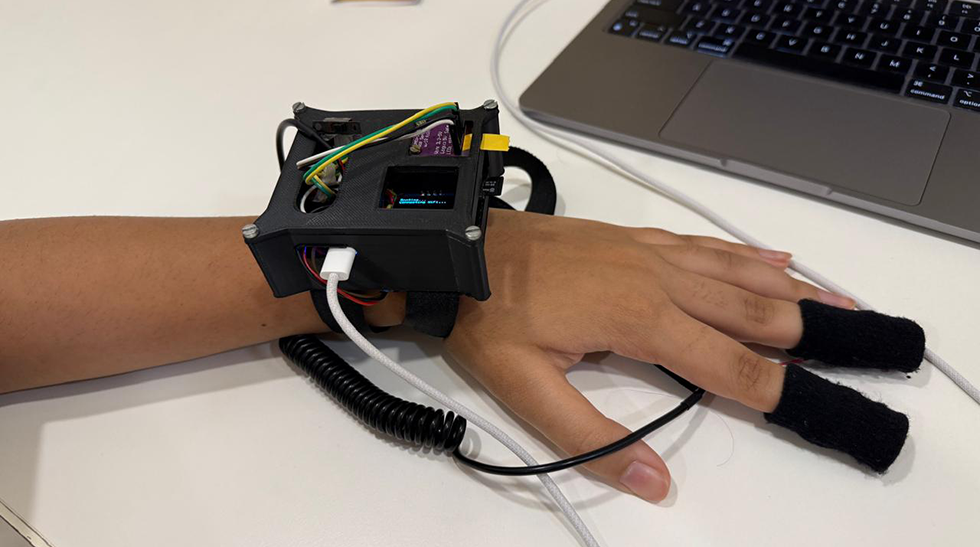
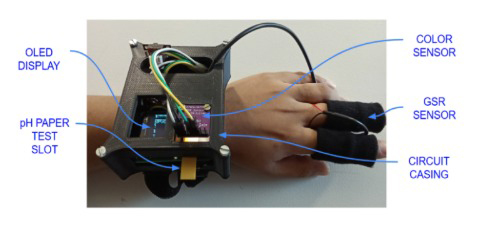
A disposable paper strip sits against the skin and changes colour according to acidity. An RGB colour sensor reads the colour change and converts it into an estimated pH value.
Two electrodes measure how easily a small electrical current passes across the skin, providing a second signal related to moisture and sweat activity.
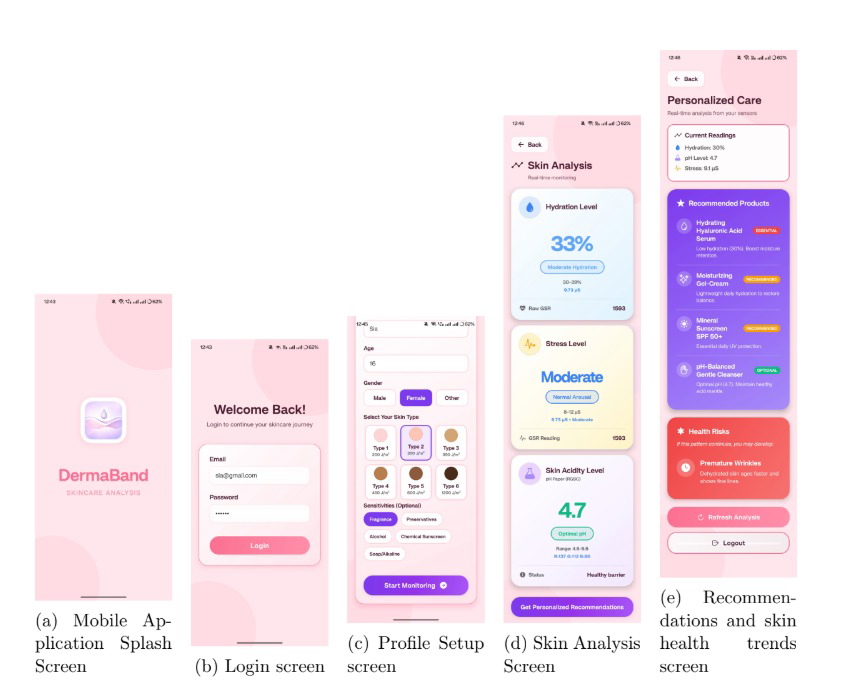
An ESP32 microcontroller processes the readings and sends them wirelessly to a companion mobile app, where the two signals can be viewed and tracked together.
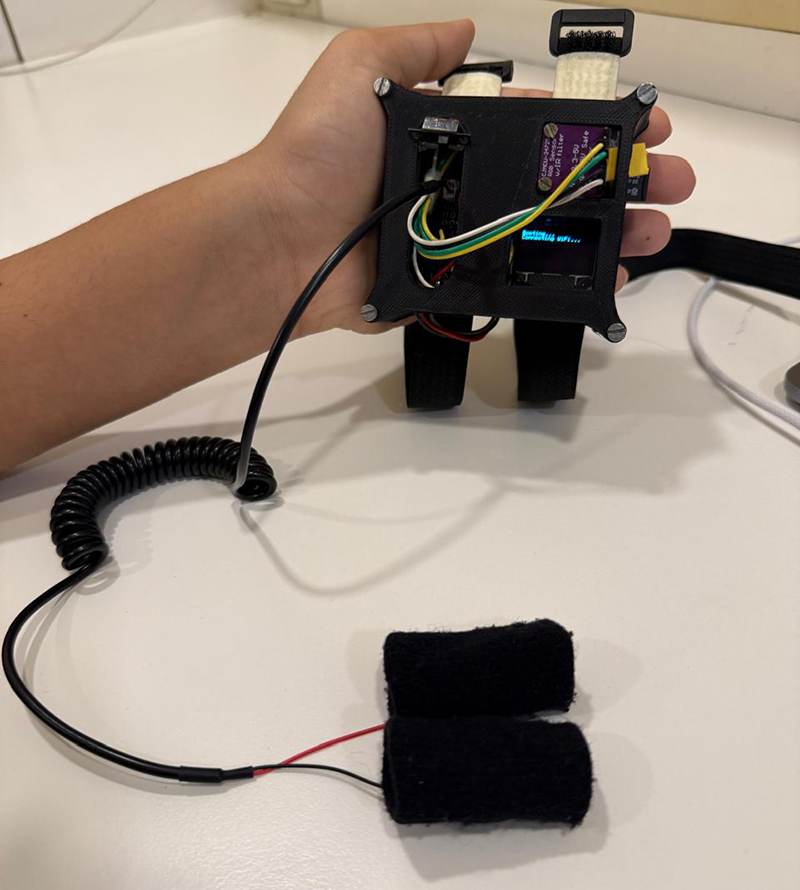
I designed and built the prototype, integrated the sensors, developed the testing protocol and collected and analysed the data. The project moved through literature review, prototyping, calibration, coding, testing and analysis over several months.
Testing also showed me how sensitive simple measurements can be to the conditions around them. Lighting affected how pH-strip colours were interpreted, while contact, movement and moisture could change conductance readings. I worked on making the testing process more consistent, calibrating the sensors and comparing repeated measurements rather than relying on individual readings.
The same questions around personal-care products are also part of my independent sustainability research.
In Estimation of Plastic Use from Personal Skincare Routines, I studied the amount of plastic generated by everyday personal-care routines and their related packaging carbon footprint.